
Des Moines, Iowa
Crawl Space Encapsulation in Des Moines
Musty smell, damp floors, insulation hanging down, water after a rain? Tell us what’s going on under the house and a local crawl space contractor will contact you to quote.
Free to request · One local contractor · No obligation to hire
A damp crawl space doesn’t stay in the crawl space. Moisture from below can affect the air upstairs, damage flooring and framing, and make the home harder to heat and cool.
Here’s what a real encapsulation job includes, what it costs, and the safety and radon questions worth asking before anyone seals it up.
What encapsulation actually is
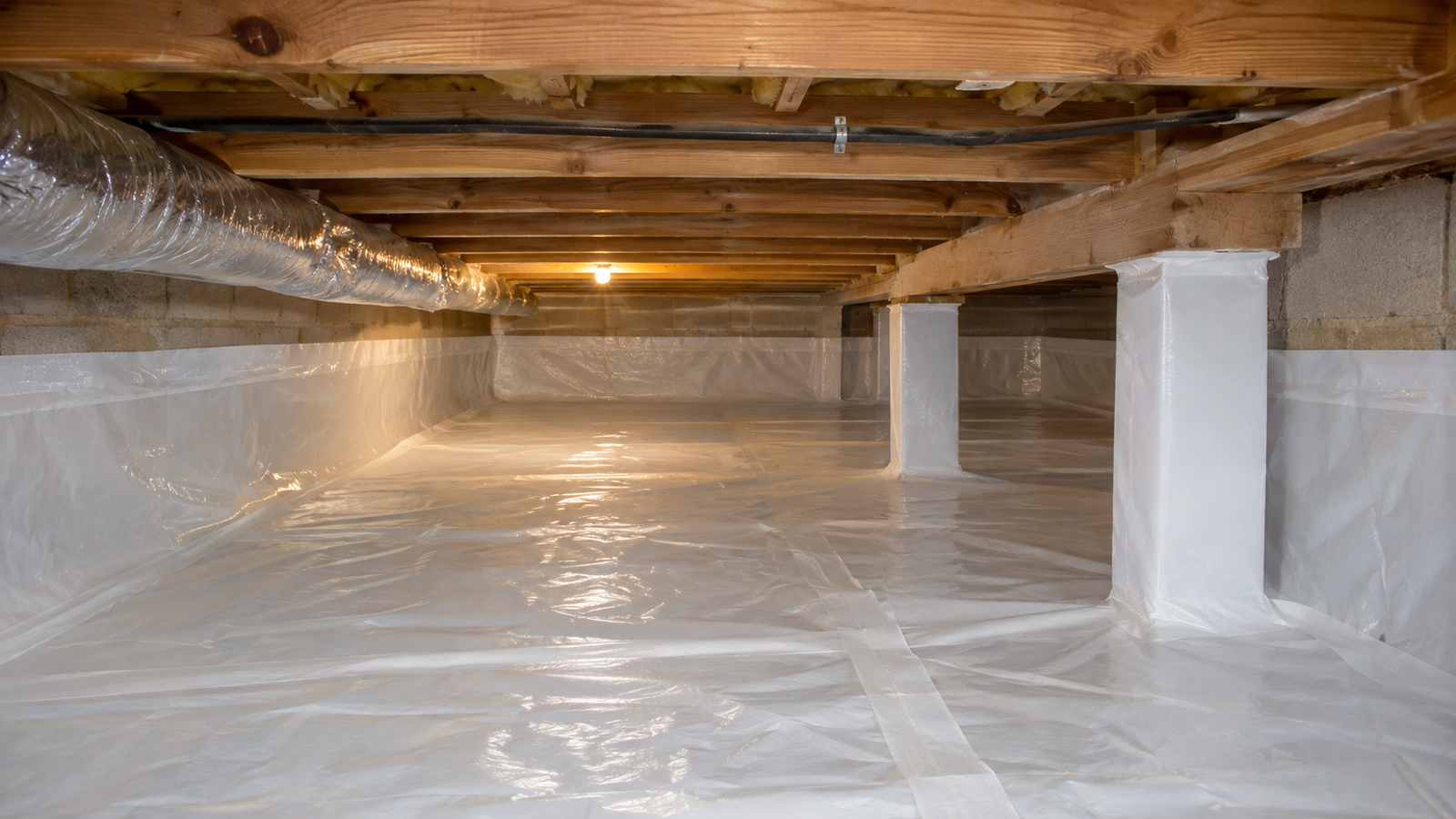
Crawl space encapsulation seals the space off from the ground and the outside air. A proper job includes:
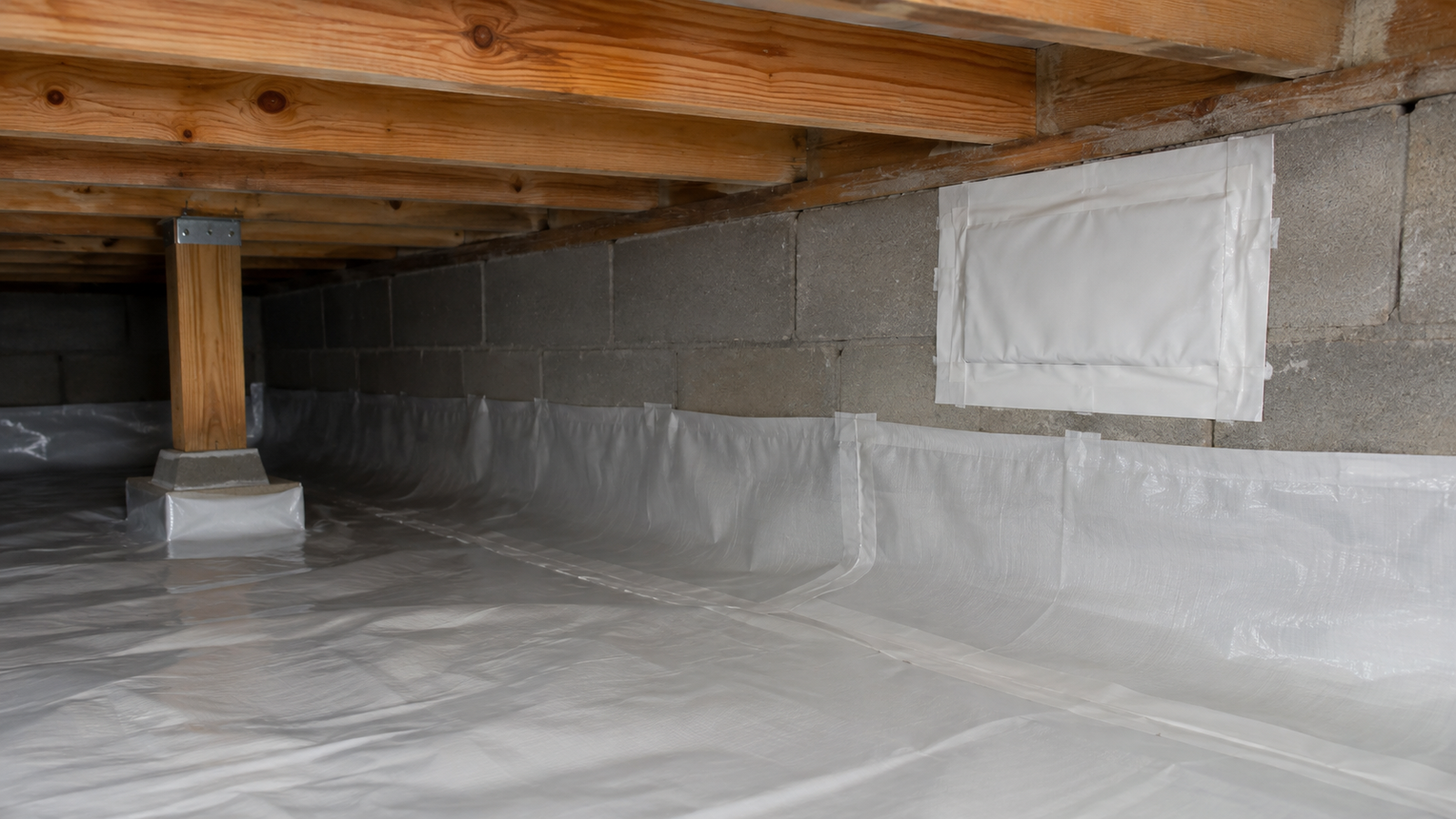
- A sealed ground liner, usually running up the foundation walls
- Taped seams and sealed edges
- Air sealing, including closing off foundation vents
- Insulation where the design calls for it
- A plan for controlling humidity. Depending on the home, that may include a crawl space dehumidifier.
If there’s standing water, the source needs to be dealt with before the liner goes in. Depending on the problem, that may mean drainage improvements or a sump pump. Our basement waterproofing page covers how those systems work.
Vapor barrier vs. encapsulation
Two quotes can come in thousands of dollars apart, and both will say they’ll “fix your crawl space.” Usually that’s because they’re quoting two different jobs.
- Vapor barrier: a moisture-resistant sheet installed over the ground to cut down on water vapor coming up from the soil. Coverage, seam sealing and attachment vary by installation.
- Encapsulation: a sealed system. The liner, wall coverage, air sealing, insulation and humidity control all work together.
A vapor barrier is one piece of an encapsulation. The difference is the whole system, not just the plastic.
Comparing quotes?
Ask about the liner: its thickness in mils, whether it’s reinforced, and how it’s sealed and attached to the walls.
Thickness matters, but so do seam sealing, wall attachment, moisture control and the quality of the install.
Costs
What does crawl space encapsulation cost in Des Moines?
Published national figures put most jobs between $1,500 and $15,000, with the average around $5,500. By the square foot, that’s about $3 at the low end, $7 on average, and up to $10 when there’s serious moisture to deal with first. A 1,000 square foot crawl space typically lands between $3,000 and $7,000.
| What’s included | Typical published cost |
|---|---|
| Thin plastic sheeting (material only) | $0.05 to $0.20 per sq ft |
| Heavy-duty reinforced liner (material only) | $0.40 to $0.60 per sq ft |
| Sealing foundation vents | $10 to $22 per vent |
| New access door | $60 to $150 |
| Dehumidifier, installed and wired | $800 to $2,000 |
| Drainage system | $600 to $1,800 |
| Spray foam insulation | $1.00 to $3.50 per sq ft |
| Rigid foam board insulation | $2.50 to $3.00 per sq ft |
| Mold removal, if present | $500 to $4,000 |
| Permit and inspection, where required | $100 to $250 |
Liner prices are for materials only. Installed totals include labor, prep and the other items above. Labor is 50 to 70 percent of the bill, so the price depends more on what your crawl space is like to work in than on which liner you pick.
What drives your number up or down:
- Headroom and access. In a 24 inch crawl with one small hatch, every roll of liner and every bag of debris goes through that hatch by hand. This is the biggest cost driver, and you can’t see it on a floor plan.
- Cleanout. Old torn plastic, fallen insulation, rodent damage and junk all have to come out first.
- Standing water. If water is sitting in there, fixing it is its own line item.
- Mold or rotted wood. Remediation and any joist repair come on top.
- Walls or floor only. Some quotes cover the walls and some only cover the floor.
- Humidity control. If a dehumidifier is part of the plan, ask whether it needs its own circuit and drain line.
An important safety check before encapsulation
If you have a gas furnace or gas water heater in your crawl space, read this before you sign anything.
Many older gas appliances pull their combustion air from the space around them. Seal that space up and you change their air supply. That’s not a comfort issue. It’s a safety issue.
A good crew will bring this up without you asking. Their quote should say how combustion air and venting will be handled, whether that’s a sealed-combustion upgrade, a dedicated air supply or something else.
If it’s not in the quote, ask. If the answer is vague, get another opinion.
Why it matters more in Iowa: radon
The EPA lists every county in Iowa as Zone 1, its highest radon category. Statewide, Iowa’s average indoor radon level is 8.5 picocuries per liter, compared with 1.3 nationally, and the state estimates as many as 5 in 7 Iowa homes have elevated levels. Those are statewide estimates. Your house can only be measured by testing it.
Crawl spaces are one of the ways radon gets in. The state names them directly, along with foundation cracks and gaps around pipes and sump pits. Radon also shows up in homes with or without a basement.
Encapsulation is a good time to plan for radon. A qualified radon contractor may be able to add a sub-membrane suction system while the crawl space is being sealed. Whether you need one depends on testing and your home’s conditions.
Test either way. Sealing a crawl space changes how air moves through the house. The EPA action level is 4 pCi/L, and Iowa offers one free test kit per household while supplies last. Call 1-800-383-5992.
Do you still need insulation?
Usually yes, but where it goes depends on the design.
- In a vented crawl space, insulation usually goes between the floor joists, under the house.
- In a sealed crawl space, it often goes on the foundation walls and rim joists instead, depending on the design and local code.
Common choices:
- Rigid foam board on the walls. It holds up well to damp conditions.
- Closed cell spray foam at the rim joists. It seals and insulates in one pass.
- Fiberglass batts can perform poorly when they get damp or sag away from the framing. That’s worth keeping in mind in a space with moisture problems.
A Des Moines winter note
The city designs for a 42 inch frost line and a 0°F winter design temperature.
If floor insulation comes out, any pipes down there depend on the crawl space staying above freezing. Ask your contractor how they’ll handle that.
Signs your crawl space needs attention
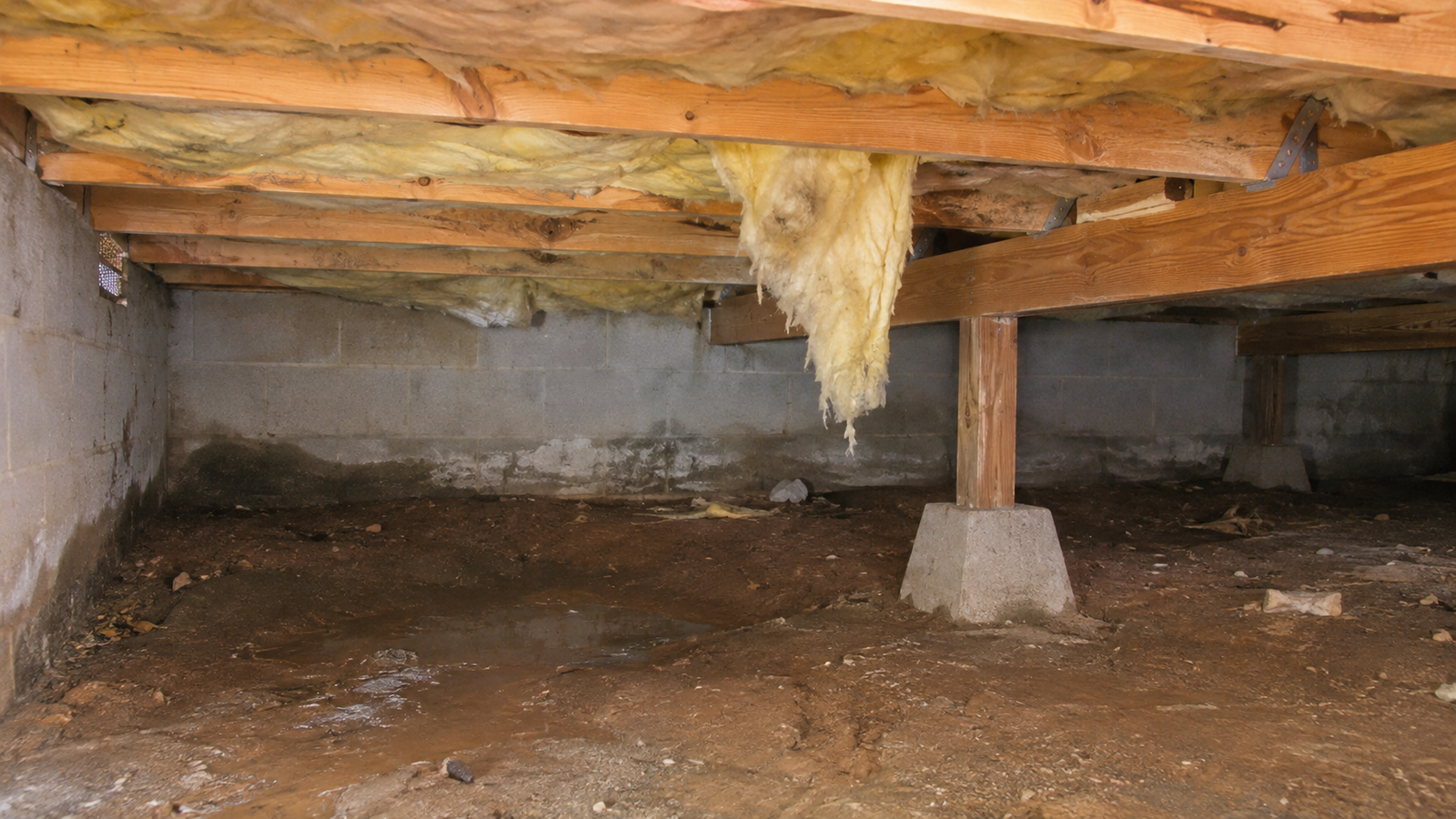
- A musty smell upstairs, especially in summer
- Cold, damp or soft floors over the crawl space
- Sagging or wet insulation hanging from the joists
- Standing water or wet dirt after rain
- White fuzz, black spots or rot on the wood
- Mice, bugs or other critters getting in
- High humidity in the house you can’t seem to fix
If you’re seeing two or three of these, it’s worth getting someone to look.
What a good quote should include
Before you compare prices, make sure every quote lists:
- Liner type and thickness, whether it’s reinforced, and whether it covers the walls or just the floor
- How the seams and edges are sealed and attached
- What happens to the vents
- How humidity will be controlled. If a dehumidifier is included, ask for the make and size and whether the wiring and drain are covered.
- Insulation type, and which surfaces get it
- How gas appliances will be handled, if you have any
- Drainage or sump work, if water is present
- Cleanout and disposal
- Warranty terms, for both the materials and the workmanship
If two quotes don’t list the same things, you’re not comparing the same job.
Common questions
How long does crawl space encapsulation last?
Heavy-duty crawl space liners can last many years when they’re properly installed and maintained. Ask about both the manufacturer’s material warranty and the contractor’s workmanship warranty, since they may cover different things.
Common maintenance items include a dehumidifier if you have one, seam tape, and any vent somebody reopened.
Will encapsulation get rid of a musty smell?
Often, yes. Air and moisture from a crawl space can move into the living areas above. Sealing the ground and controlling humidity removes the source instead of covering it up.
If mold is already growing on the wood, though, it should be cleaned up as part of the job, not sealed in.
Can I encapsulate a crawl space myself?
The materials are easy to buy. The hard part is hours on your back in a tight, dirty space, wrestling heavy liner, possibly breathing mold spores and radon.
If there are gas appliances down there, leave the vent sealing to a pro.
Is there a tax credit for crawl space encapsulation?
Not anymore. The federal energy efficiency credit for insulation and air sealing covered work done through December 31, 2025. It doesn’t apply to jobs done now. Talk to a tax professional about your own situation.
Do I need a permit in Des Moines?
It depends on the scope. A liner alone usually doesn’t need one. Electrical work for a dehumidifier, plumbing for a sump, or structural repairs may. Your contractor should know, and should pull any permits that are needed.
Get a quote from a Des Moines crawl space contractor
Tell us roughly how big the crawl space is, how you get into it, and whether there’s water in there now.
We’ll connect you with an independent local contractor who does this work. They’ll take a look and give you a real price.
Sources
- This Old House, crawl space encapsulation cost, updated March 13, 2026
- Iowa Health and Human Services, Radon Home Buyers and Sellers Fact Sheet
- Iowa Health and Human Services, radon
- City of Des Moines, Ordinance No. 16,224, Sec. 26-300(f), climatic and geographic design criteria
- IRS, Energy Efficient Home Improvement Credit