
Des Moines, Iowa
Basement Waterproofing in Des Moines
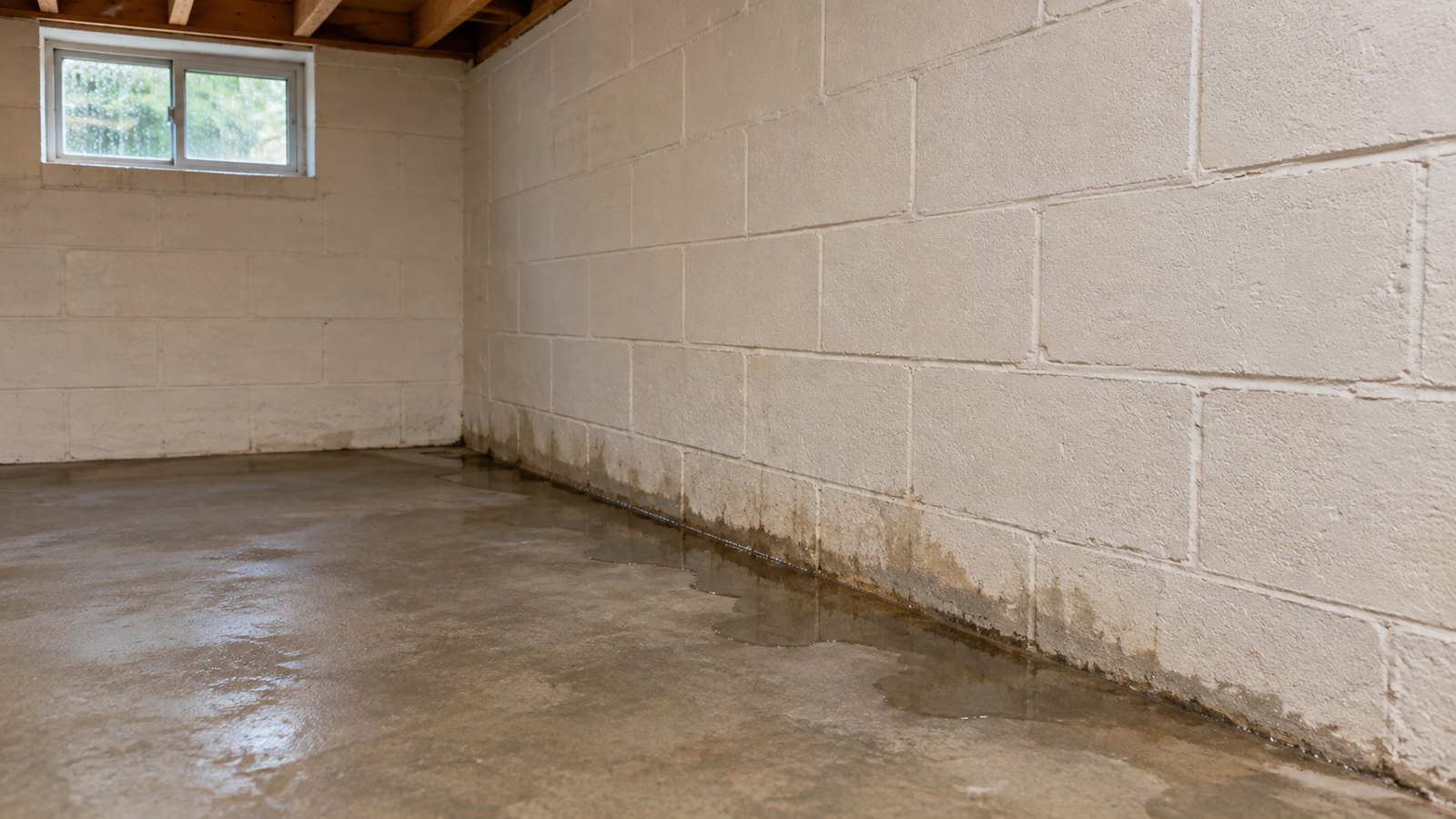
Water in the basement after a heavy rain? Damp walls, a musty smell, white chalky marks on the block? Tell us what’s happening and a local waterproofing contractor will contact you to quote.
Free to request · One local contractor · No obligation to hire
A wet basement is usually a drainage problem first. Water gets in because it’s sitting against the wall with nowhere else to go. The fix that lasts is the one that gives it somewhere to go.
Sometimes that’s gutters and grading. Sometimes it’s an interior drain system and a sump pump. The order you try things in matters more than any product.
Does a basement in Des Moines need waterproofing?
Not every basement, but the ground here makes water likely.
The Iowa Geological Survey describes drainage across the Des Moines Lobe as incomplete. The USDA classifies the common soils here as poorly drained, with saturated ground close to the surface in the wettest part of a normal year. In plain terms, a lot of Des Moines foundations sit in clay that holds water against the walls.
What your basement needs depends on what it’s doing:
- Damp that comes and goes with the weather, a musty smell, or white chalky deposits usually mean moisture moving through the wall. That’s often solved outside the house.
- Water coming in where the floor meets the wall, or standing after heavy rain, may mean water pressure from saturated soil. If fixing the outside drainage doesn’t solve it, an interior drain system and sump pump may be needed.
Worth knowing
Contractors often talk about water management rather than waterproofing. A basement is built to resist water, not to seal it out like a swimming pool.
Be wary of any quote promising a permanently dry basement from a coat of paint.
What should you try first?
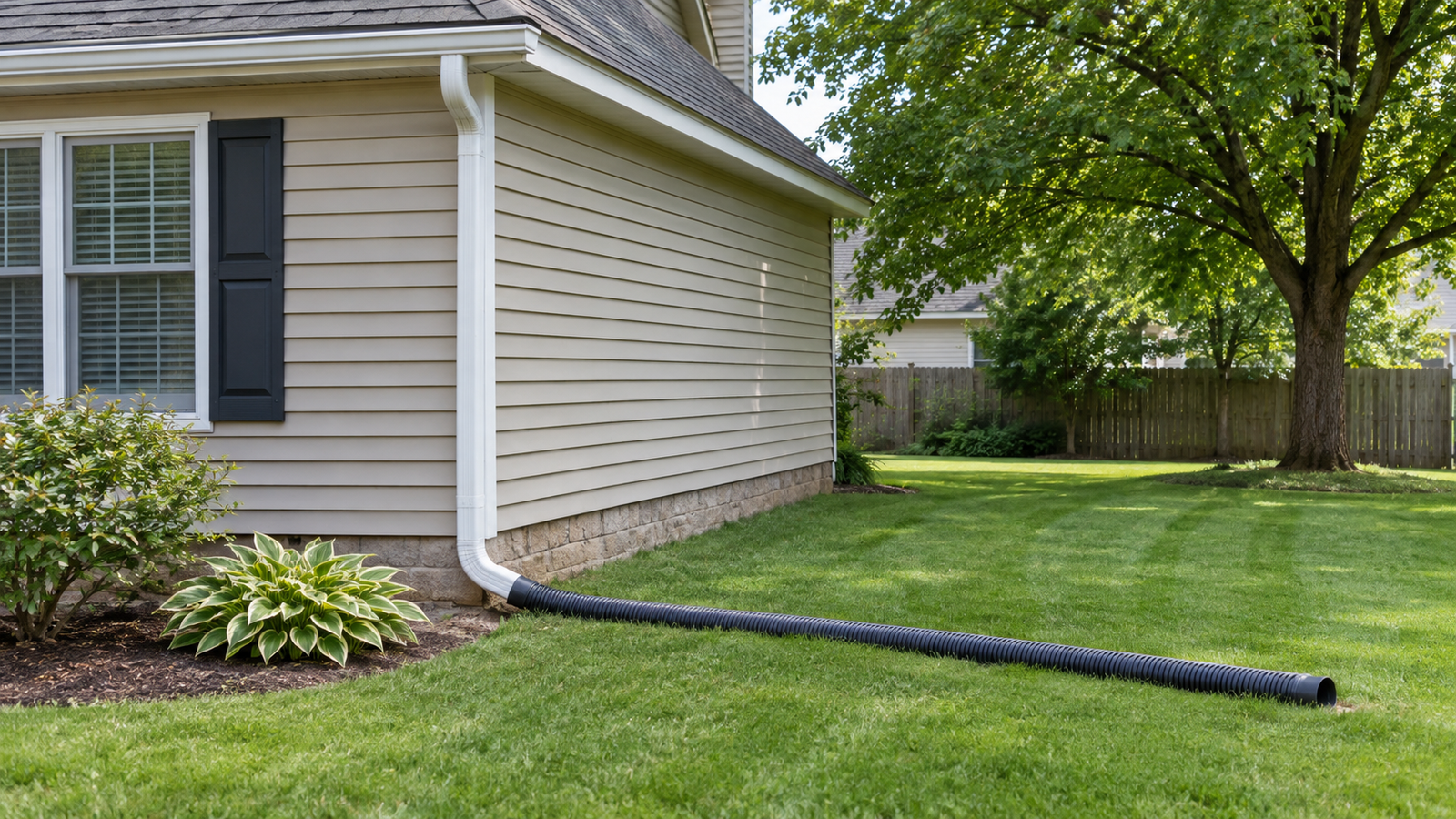
Start with the cheapest fixes. Gutters that actually carry water, downspouts that drop it well away from the wall, and ground that slopes away from the house solve a lot of leaks on their own.
Then work up in cost and disruption:
- Gutters, downspout extensions and grading. Get water away from the wall before you spend money on the wall.
- Seal the specific leak. A single leaking crack or a gap around a pipe can often be injected. That’s foundation crack repair, and it costs far less than a full system.
- Interior waterproof coating. This slows moisture moving through a dry wall. It won’t hold back standing water. Applied over an active leak, it can trap water in the block.
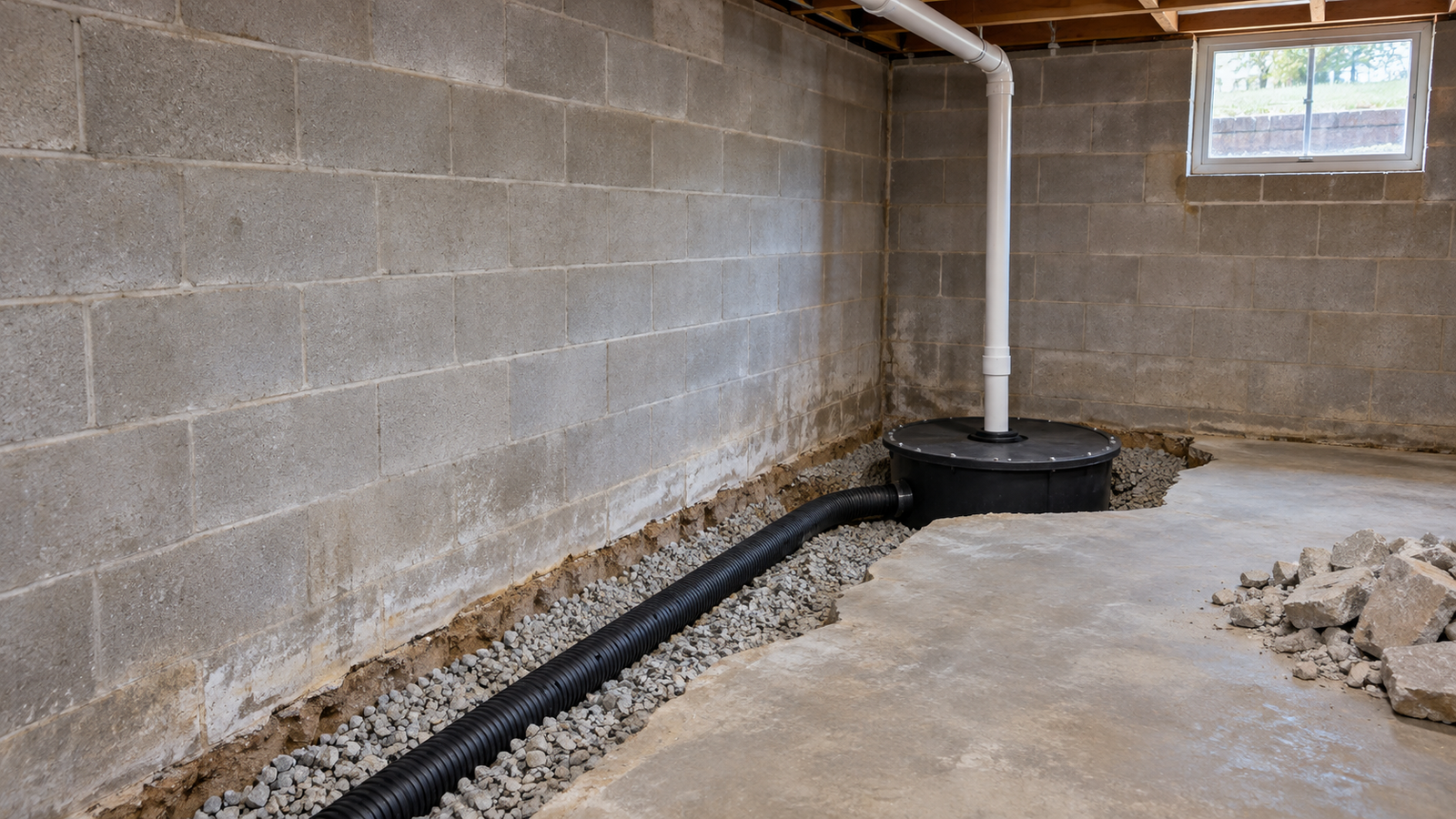
- Interior drain tile and a sump pump. A channel is cut into the slab around the edge of the basement, perforated pipe goes in on a gravel bed, and it all drains to a sump pit where a pump sends the water out.
- Exterior excavation and membrane. The wall is dug out down to the footing, sealed from outside, given a new footing drain and backfilled. It’s the most thorough option, and the most expensive.
Before agreeing to an expensive drainage system, ask the contractor whether gutters, grading or other outside drainage problems are contributing to the water.
Inside or outside: which is better?
Inside manages water that gets in. Outside keeps it from getting in at all.
Outside is the more complete fix, but it means digging down to the base of the foundation, so it costs much more for the same length of wall. For many Des Moines homes with one wet wall, interior drain tile is the practical answer.
Often the choice is made for you by what’s against the wall. A driveway, patio, deck, addition, a property line a few feet away, or a big tree you want to keep can rule out exterior work, or add demolition and replacement to the bill.
A wall that’s leaking and also cracking horizontally needs a closer look. Water pressure and soil movement may both be involved, and waterproofing alone may not be enough. A structural assessment can tell whether the wall needs stabilizing as well as better drainage.
Costs
What does basement waterproofing cost in Des Moines?
It depends heavily on which fix you need. This Old House puts the average full job at about $13,640 for a 1,000-square-foot basement. That figure covers a full waterproofing project. Many homes need far less.
| Approach | Published cost | What it does |
|---|---|---|
| Gutter installation | $650 to $1,750 | Moves roof water away before it reaches the wall |
| Waterproof paint or coating | $1 to $8 per square foot | Slows moisture through a dry wall, but won’t stop standing water |
| Crack injection | $250 to $800 for typical crack filling | Closes one specific leak |
| Interior drain tile | $60 to $120 per linear foot | Collects water under the slab |
| Sump pump, installed | $1,200 to $2,500 | Pumps the collected water out |
| Exterior excavation and membrane | About $20,000 or more for a full job | Keeps water out of the wall entirely |
| Mold remediation, if needed | $500 to $3,500 | A separate line item, often left out |
As an example, a 120 to 150 foot basement perimeter at $60 to $120 a foot works out to roughly $7,200 to $18,000, before the sump pump. Your basement’s perimeter, and how much of it needs treating, will set the real number.
More involved crack injections can cost more. This Old House’s waterproofing guide lists epoxy injection at $800 to $1,500 per crack. Our crack repair page explains what moves that price.
Two things often get left out of a quote, so ask about both:
- Is the sump pit and pump included in the drain tile price?
- Is build-back covered? In a finished basement, drywall, flooring and framing have to come out and go back. That’s often quoted separately, or not at all.
What’s the downside of waterproofing a basement?
The biggest risk is treating the symptom and calling it fixed. A sealed, painted wall with a leak behind it can look dry while water keeps moving through the block.
Interior systems also move water rather than stopping it. They depend on a pump, and a pump depends on power, often during the same storm that floods basements. Ask about a battery backup.
Coatings on the inside of a wall have their own weak spot. They bond to the surface, so where water pressure builds behind them, they can peel or lift off. That’s why coatings belong on dry walls, not on walls holding back water.
Then there’s mold. Sealing a damp basement without dealing with the humidity can leave moisture with nowhere to go.
A good waterproofing plan includes keeping the space dry afterward, usually with a dehumidifier that drains on its own.
What does the City of Des Moines require?
Des Moines has specific rules about where basement water can go. Under the city’s current stormwater ordinance, where a city storm sewer is available, footing drains must be piped to it. Drainage water generally shouldn’t go into the sanitary sewer.
Sump pump discharge, drain connections, permits and inspections all have to meet current city requirements.
Before work starts, confirm with the Permit and Development Center at 515-283-4200 where your water is allowed to discharge and whether the job needs a permit and inspection.
Digging outside? Call 811 first
Contact Iowa One Call at 811 before excavation. Iowa’s required 48-hour notice period starts at 6 a.m. on the next business day after your request is received, excluding weekends and legal holidays.
This applies to homeowners as well as contractors. Follow the start date and utility-marking status Iowa One Call gives you.
The radon question most people miss
If you’re opening up a basement floor in Iowa, think about radon now. Iowa Health and Human Services considers the entire state at high risk for radon in homes.
Here’s the connection. Radon gets into houses through cracks and openings in the foundation, including around floor drains, pipes and sump pumps. An interior drain tile system adds a gravel layer under your slab connected to a sump, which matters for radon either way.
If you’re installing drain tile or a sump pit, ask whether the system should be designed to allow for radon mitigation. A sealed sump cover may be appropriate, but a qualified radon professional should decide whether more equipment or venting is needed.
Then test, because testing is the only way to know your level. The EPA action level is 4 picocuries per liter. Iowa HHS offers free test kits while supplies last, and low-cost kits through the Iowa Radon Hotline at 1-800-383-5992.
Common questions
What’s the cheapest way to waterproof basement walls?
Fix the water outside first. Extending downspouts and correcting the slope of the ground against the house are the cheapest steps on the list, and they solve a lot of wet basements outright, because much of the water reaching a basement wall comes off the roof.
Of the things applied to the wall itself, waterproof paint is the cheapest, at $1 to $8 a square foot. It’s also the fix most often sold to people whose problem it can’t solve.
How much does it cost to seal a basement?
It depends what “seal” means. Waterproof paint runs $1 to $8 a square foot, and This Old House puts a full vapor barrier at $1,500 to $3,000.
That’s a much smaller job than a drainage system, but both get quoted under the same word. Ask which one you’re being priced for.
How do you waterproof basement walls from the outside?
The wall is excavated down to the footing, cleaned and repaired, coated with a waterproof membrane, given a new perforated footing drain in gravel, and backfilled. Excavation alone runs about $50 to $200 per cubic yard.
Remember to contact Iowa One Call at 811 and wait out the notice period before anyone digs.
Does waterproofing a basement increase home value?
It removes an objection more than it adds value. Buyers notice water stains and musty smells, and an unexplained one gives them a reason to negotiate or walk away.
Keep the paperwork. The invoice, the warranty and any engineer’s letter are what make the repair count when you sell.
How long does basement waterproofing take?
Interior work usually takes a few days. Exterior excavation takes the longest, from a few days for one wall to a week or two for a full perimeter. Ask the contractor for a timeline in writing.
Can you waterproof a basement yourself?
The outside work, often yes. Cleaning gutters, adding downspout extensions and building up the grade against the house are reasonable weekend jobs that often fix the problem.
Cutting the slab for drain tile is a different story. It’s heavy work, and Des Moines limits some plumbing work by homeowners, so check with the Permit and Development Center before you start.
Get a quote from a Des Moines basement waterproofing contractor
Tell us what your basement does and when: after heavy rain, in spring, all the time? We’ll put you in touch with a local waterproofing contractor.
A good one will look at your gutters and grading before they look at the wall.
Sources
- This Old House, basement waterproofing cost, updated March 4, 2026
- This Old House, foundation repair cost, for crack injection
- Iowa Health and Human Services, radon
- Iowa Geological Survey, University of Iowa, Des Moines Lobe
- USDA Natural Resources Conservation Service, Webster series official soil description
- Iowa One Call, 2024 law update
- City of Des Moines, Ordinance No. 16,094 (2022), amending Municipal Code section 135-8.3.2, stormwater management