
Des Moines, Iowa
Foundation Crack Repair in Des Moines
Found a crack in your basement wall? Most cracks in a Des Moines foundation aren’t an emergency. Thin vertical cracks in a poured concrete wall are usually just shrinkage from when the concrete cured, and a lot of houses have them. What matters is the crack’s shape, its width, whether it leaks and, most of all, whether it’s still moving.
Free to request · One local contractor · No obligation to hire
A crack that has stopped moving may need simple sealing, or nothing at all. A crack that’s still opening is usually a sign of something else, and sealing it won’t fix the cause.
Are cracks in a foundation normal?
In poured concrete, yes, especially thin vertical ones.
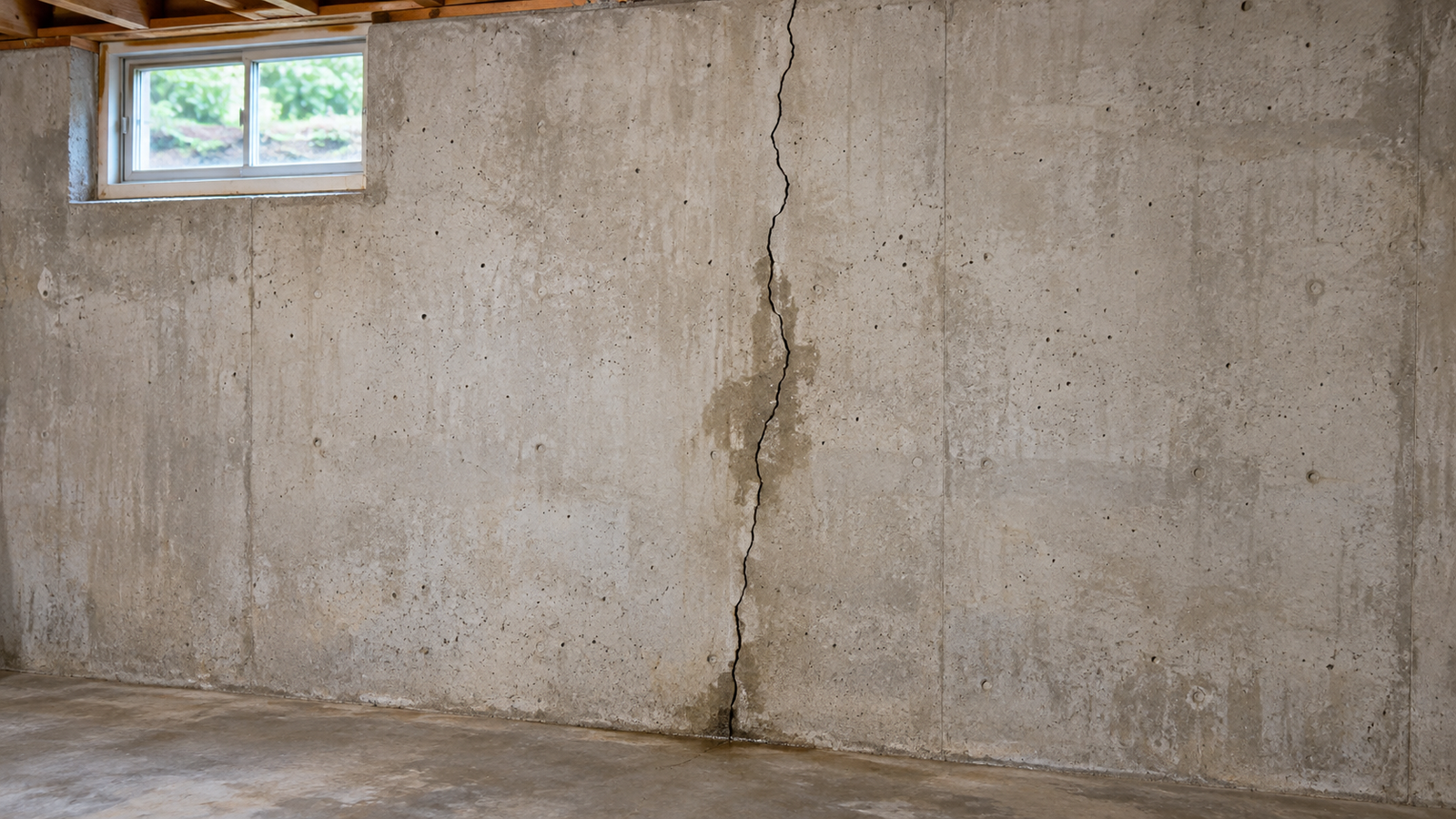
Concrete shrinks as it cures and cracks where it’s weakest, often near a window or in the middle of a long wall. These cracks usually show up in the first year or two, stay about the width of a hair or a credit card edge, and don’t change.
What isn’t normal:
- A crack that keeps getting wider
- A crack that’s wider at one end than the other
- A horizontal crack in a block wall
- A crack where one side sits out from the other, so you can feel a step across it
Those suggest something may be moving the wall.
A free way to check
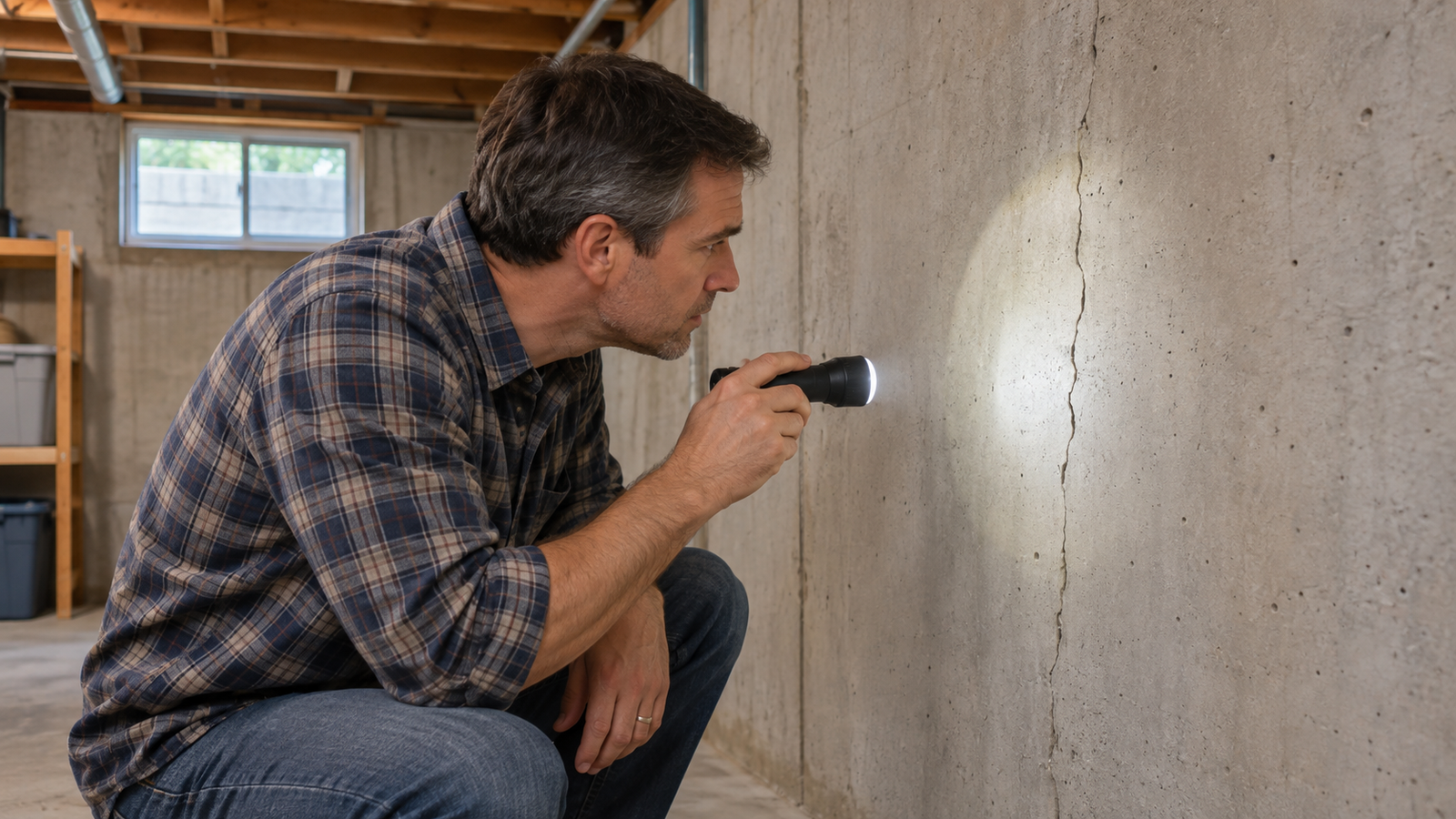
Monitoring can help with a small, dry crack that shows no other signs of movement. Mark both ends with a pencil, write the date beside it, and measure the width. Check it again in a few months.
If it hasn’t changed, it may need simple sealing, or nothing at all.
Don’t wait if the crack leaks, is widening, or shows up alongside bowing, sticking doors or other changes in the house. Arrange an assessment instead.
Reading the crack
What does a crack that matters look like?
The shape of a crack is a useful clue to what’s going on, though it isn’t a diagnosis. Knowing these patterns before anyone quotes you helps you understand what the contractor is looking at and ask better questions.
| What you see | What it may point to | What usually comes next |
|---|---|---|
| Thin vertical crack, poured wall, not changing | Shrinkage from curing | Often nothing, or sealing if it leaks |
| Diagonal crack from the corner of a window or door | Possible settling at that corner | Monitoring or an assessment |
| Stair-step crack along the mortar joints in a block wall | Possible settling or sideways movement | An assessment to find the cause |
| Horizontal crack in a block wall | Possible soil pressure pushing the wall inward | A prompt assessment |
| Crack with one side sitting out from the other | Possible active movement | An assessment before anything else |
| Gap opening between the wall and the floor | The slab or wall may be moving | An assessment |
| Wider at the top than the bottom, or the reverse | Possible rotation or settling at one end | An assessment |
Horizontal cracks in a block wall deserve prompt attention. They can mean soil is pushing the wall from the side, and the next stage is the wall bowing inward, which is a much bigger repair.
Hold a long straightedge against the wall. If you see daylight in the middle, measure the gap. The amount of bowing is one of the things a contractor or engineer considers when recommending a repair.
Gaps are worth mentioning too. Homeowners often call something a crack when it’s really a gap, where two parts of the house have separated rather than one part breaking. A contractor will want to see those.
Epoxy or polyurethane: which is better?
It depends on what the repair needs to do.
- Epoxy is commonly used when a crack needs a rigid structural bond.
- Polyurethane is often used to seal leaking cracks, because it can handle slight movement.
Neither product fixes ongoing foundation movement. If the wall is still moving, the cause has to be addressed too, or the crack may reopen or a new one may form nearby.
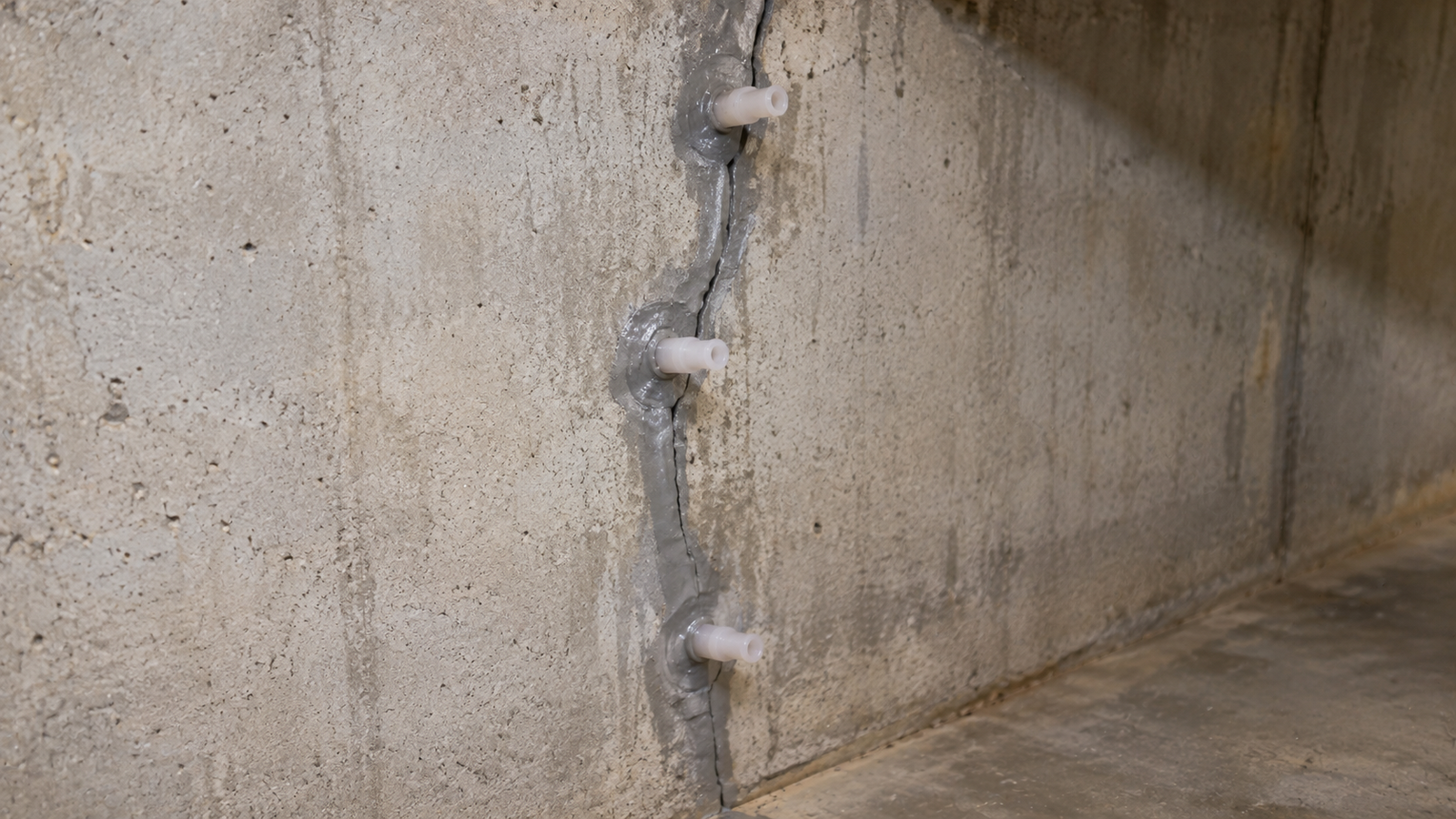
Both are injected under pressure through small ports along the crack, so the material goes into the crack rather than just covering the surface.
Block walls are different. Injection works best in solid poured concrete, so hollow block usually needs another approach. That’s one reason the same-looking crack can get very different quotes depending on what your wall is made of.
Can Flex Seal or caulk fix a foundation crack?
Not if the wall is moving or leaking.
Surface coatings and caulk sit on the face of the concrete. They don’t resolve structural movement, and they may not hold back water for long, because water under pressure can get behind them.
They also cause two practical problems:
- You can no longer watch the crack, which was the most useful information you had.
- A repair crew may have to remove the coating before they can fix the crack properly.
Hydraulic cement has a real use: stopping water flowing through a hole in a hurry. But it’s a patch, not a repair, and it’s rigid, so it can crack again if the wall moves.
Can you repair a foundation crack yourself?
Sometimes. Sealing a minor, dry, non-structural crack in a poured wall can be a reasonable DIY job with a hardware-store kit.
A leaking crack, or anything that might be structural, is worth having a professional look at. That includes horizontal or stair-step cracks in block, cracks wider than about a quarter inch, cracks where one side sits out from the other, or several cracks showing up at once.
For those, a foundation inspection is a smart step. This Old House puts a residential foundation inspection at $300 to $1,000, about $600 on average.
If you hire an independent structural engineer with no stake in the repair, you get an opinion from someone who isn’t selling it, which a free inspection from a repair company doesn’t give you.
Costs
What does foundation crack repair cost in Des Moines?
This Old House puts professional crack filling (epoxy, polyurethane or hydraulic cement injection) at $250 to $800.
A long, hard-to-reach or complicated crack can cost more, and several cracks together cost more than one. If the crack turns out to be a sign of a bigger problem, the cost depends on that problem, not on the crack itself:
| Repair | Published range |
|---|---|
| Crack filling or injection | $250 to $800 |
| Foundation reinforcement (12 strips) | $4,000 to $12,000 |
| Piers, when settling is the cause | $1,000 to $3,000 per pier |
| Foundation inspection | $300 to $1,000 |
That’s why it pays to know what’s behind the crack before you get quotes. If you have several cracks, have them all looked at in one visit, since contractors often have a minimum charge. Our cost page breaks down the bigger repairs.
Common questions
What’s the best product to fill foundation cracks?
It depends on the purpose. Epoxy is commonly used for a rigid structural bond in poured concrete, and polyurethane is often used to seal cracks that leak or move slightly. Surface products like caulk, rubberized coatings and paint-on sealers don’t fix structural cracks.
Is foundation crack repair worth it?
For a leaking crack, usually yes. Water getting into the wall can cause damage you can’t see.
The EPA also lists cracks in foundation walls and floors as possible entry points for radon. A crack doesn’t mean you have high radon, though, and sealing one won’t guarantee lower levels. A radon test is the only way to know.
For a dry, stable hairline crack, there’s often little to gain. If the crack is still moving, repairing only the crack usually isn’t enough.
How do contractors fix a crack in a concrete foundation?
They clean out the crack, attach small injection ports along it, seal the surface between the ports, then pump resin in from the lowest port up until it comes out the next one.
Then the ports come off and the surface is cleaned up. How long it takes depends on the crack’s length and access.
What time of year is best for crack repair?
Indoor injection can be done year-round, since it happens inside the basement.
Seasons can still tell you something: a crack that leaks in spring, or widens and narrows through the year, shows a contractor how it behaves. Mention when you noticed it and what changed.
Do foundation cracks mean the house is unsafe?
Many cracks aren’t structural. But some signs call for prompt evaluation: a block wall that’s bowing, blocks that have visibly shifted sideways, or a crack that appears suddenly and widens over days. For those, contact a structural engineer or foundation contractor promptly.
Will a crack repair come with a warranty?
Often, but read what it covers. Crack and waterproofing work frequently has a shorter warranty than piers do, sometimes none at all, even from the same company.
Ask who backs it, whether it transfers if you sell, what the transfer fee and deadline are, and what voids it. “Changes in soil conditions” is a common exclusion.
Get a quote from a Des Moines foundation repair contractor
Tell us about the crack: where it is, which way it runs, how wide it is, whether it leaks and whether it’s changed. We’ll put you in touch with a local foundation repair contractor, and that description is most of what they need before they come out.
Sources
- This Old House, foundation repair cost: crack filling, reinforcement strips and piers
- This Old House, foundation inspection cost
- US EPA, on foundation cracks as radon entry points
- Iowa Department of Public Health, Iowa Radon Home Buyers and Sellers Fact Sheet
- Iowa Engineering and Land Surveying Examining Board, Iowa Code chapter 542B