
Des Moines, Iowa
Concrete Leveling in Des Moines
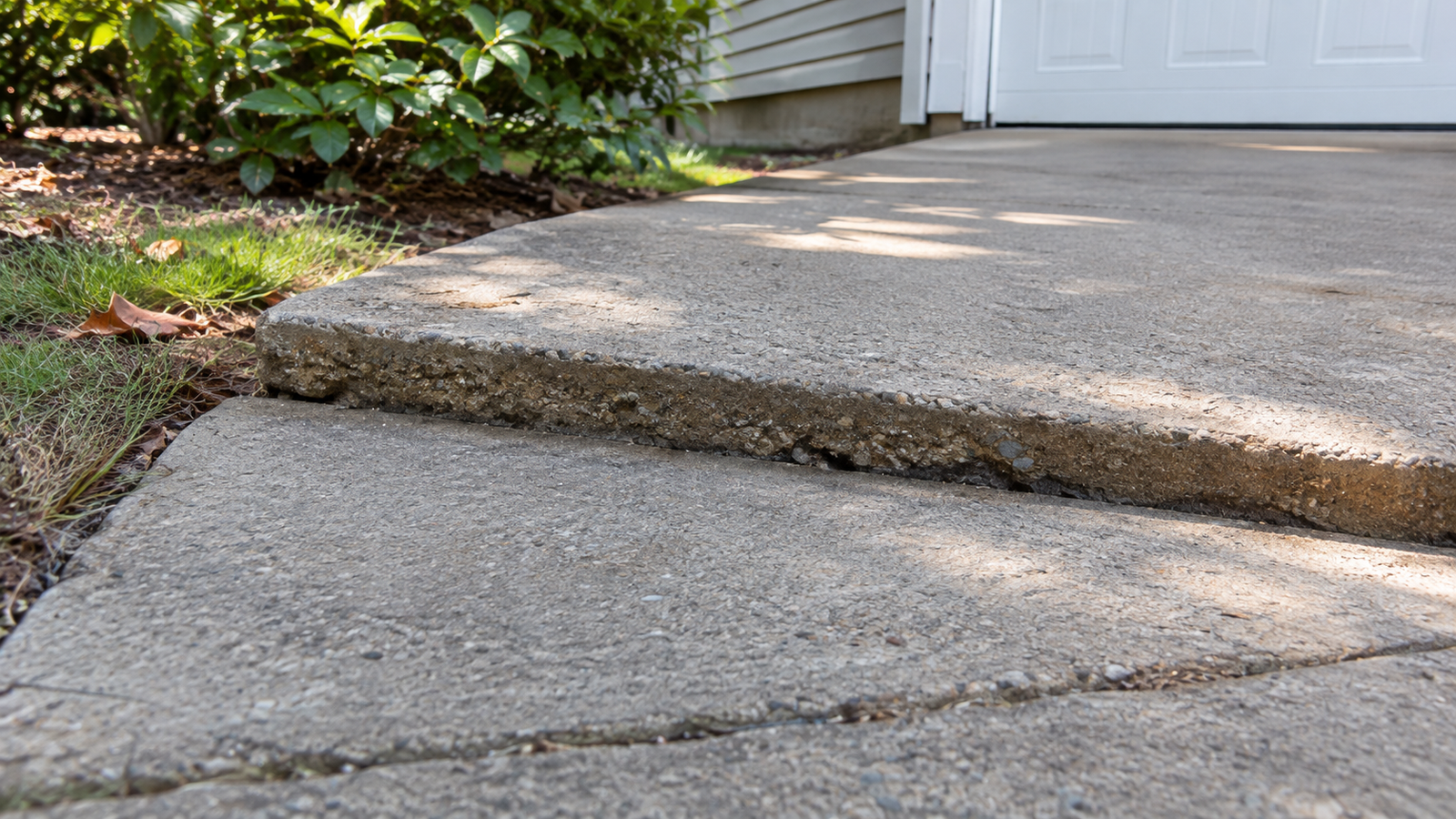
Sunken driveway? A garage floor that tips toward the drain? A sidewalk slab that’s now a trip hazard? You may not need new concrete. Tell us what’s sinking and a local contractor will contact you to quote.
Free to request · One local contractor · No obligation to hire
A sunken slab can often be lifted back into place for much less than replacing it.
Here’s how slab lifting works, what mudjacking and foam each cost, and when lifting a slab is the wrong fix.
How concrete leveling works
Concrete leveling lifts a sunken slab by filling the empty space underneath it.
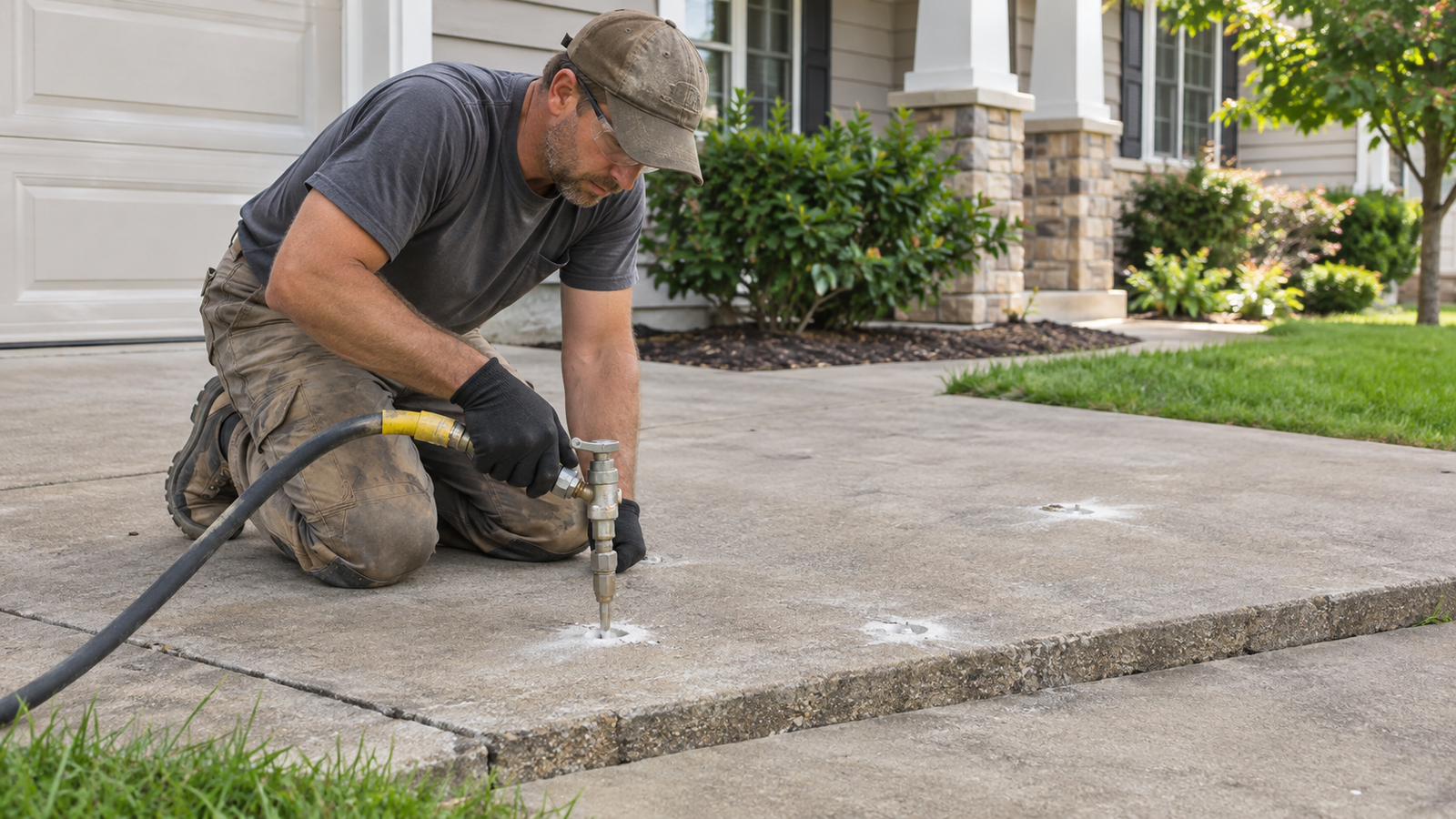
A crew drills small holes through the slab, pumps material underneath, and watches the surface until it rises back into place. Then the injection holes are patched.
- Mudjacking pumps a cement-based slurry through larger holes.
- Polyurethane foam leveling (polyjacking) injects expanding foam through much smaller holes.
Either way, it’s usually much cheaper than tearing out and replacing the concrete, and a typical residential job is often done in a day.
It only works on a slab that’s still in reasonably solid pieces. A slab that’s badly broken up may need replacing instead.
Mudjacking or foam: which one?
The biggest difference is weight. Cement slurry is heavy. Foam is very light.
- If the soil under the slab is weak, contractors often prefer foam because it adds much less weight.
- If the soil is stable and the void just came from water washing soil out, mudjacking can do the job for less.
| Mudjacking | Polyurethane foam | |
|---|---|---|
| Published cost per sq ft | $3 to $6 | $5 to $25 |
| Weight added | Heavy | Very light |
| Hole size | Larger | Smaller |
| Ready to use | Often 1 to 3 days to fully cure | Often within an hour |
| Often used for | Patios, sidewalks, stable soil | Garage floors, slabs that carry weight, weaker soil, tight access |
That’s why two quotes for the same slab can be far apart. Before you assume one is overpriced, check which method each one is quoting.
Costs
What does concrete leveling cost in Des Moines?
HomeAdvisor puts the average concrete leveling job at about $1,229, with most falling between $662 and $1,866.
| Project | Typical published range |
|---|---|
| Concrete steps | $200 to $500 |
| Sidewalk | $300 to $1,800 |
| Driveway | $600 to $3,000 |
| Patio | $600 to $3,200 |
| Garage floor | $1,100 to $2,200 |
Project ranges from Angi. Foam usually lands at the higher end of each range.
What moves your price:
- The size of the empty space underneath, not just the size of the slab. A deep washout takes far more material.
- How far it dropped, and whether the slab has broken into pieces that each need lifting.
- Method. Foam usually costs more per square foot than mudjacking.
- Access. Hard-to-reach patios and long pump runs can add cost.
- Minimum charges. Small jobs often have a minimum trip fee.
The catch: fix the water first
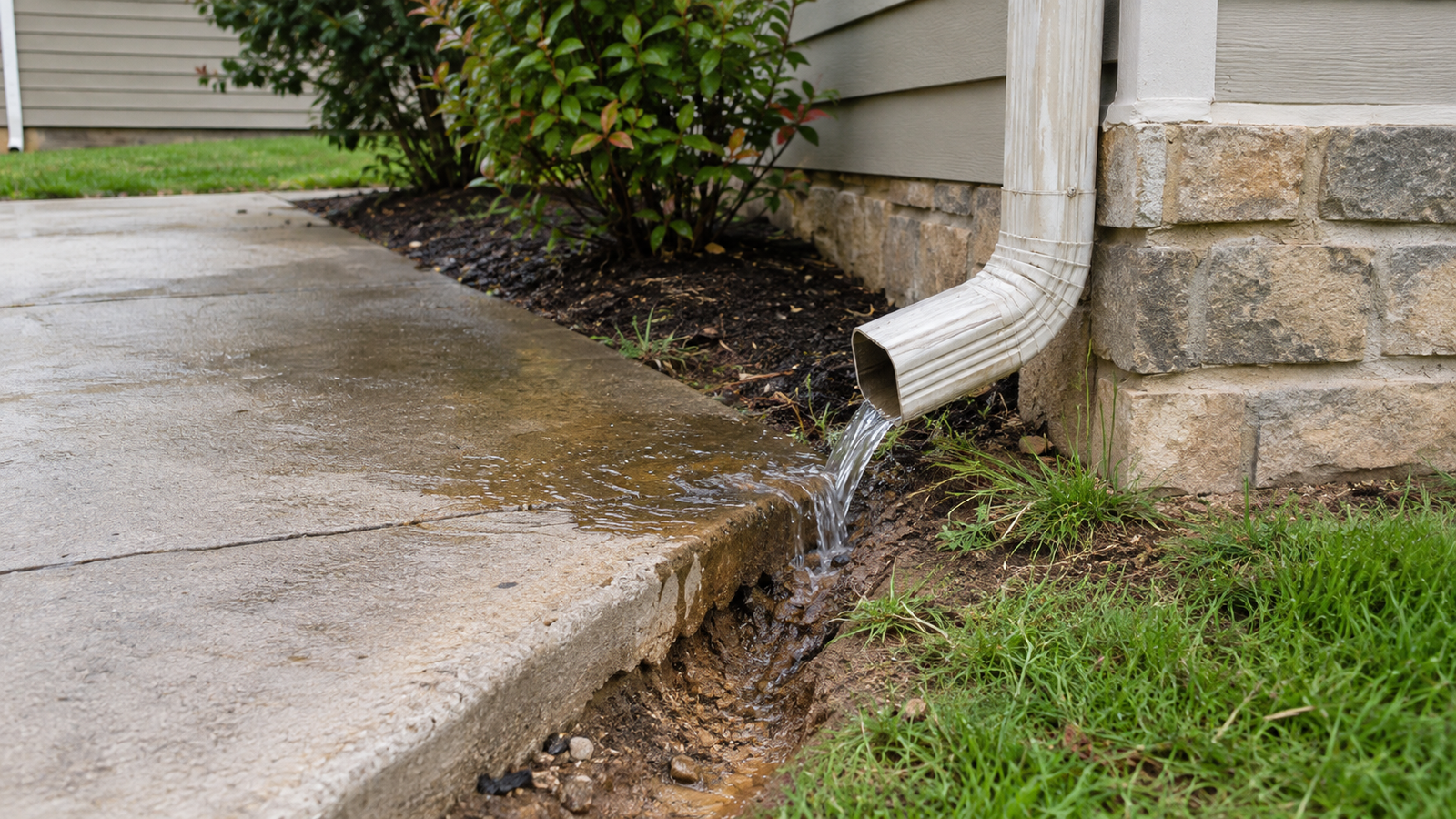
Leveling fixes the slab, not the reason it sank. In Des Moines, water is often behind it:
- A downspout dumping water at the edge of the slab
- Ground that slopes toward the concrete instead of away from it
- Soil under the slab that was never packed down properly
Lift a driveway over a downspout that’s still washing soil out, and you’ll be lifting it again.
Fixing the drainage first usually costs less than lifting the same slab twice, which is why drainage work and leveling often get quoted together. Our French drain page covers the drainage side.
A good contractor will ask where your downspouts go before they quote.
Why slabs sink in Des Moines
Freeze and thaw. Des Moines designs for a 42 inch frost line. Water in the ground under a slab freezes, expands, and pushes the concrete up. When it thaws, it leaves a little more space behind. Over many winters, the slab settles into the gap.
Slow-draining ground. The Iowa Geological Survey describes drainage across the Des Moines Lobe as incomplete, and some common local soils are classified as poorly drained. Water that can’t soak away finds another path, and that’s often right along the underside of a driveway or garage slab.
Other limits to know about
- The patched holes may still be visible, especially on decorative or highly visible concrete.
- Cracks stay cracked. Leveling raises concrete. It doesn’t repair cracks or flaking, pitted surfaces.
- Badly broken slabs may not come back evenly and may need replacing.
Common questions
Will spray foam from the hardware store lift concrete?
No. Canned gap-filling foam isn’t made to carry weight. It might fill a hole, but it won’t lift a slab evenly, and it can cause cracking.
Slab lifting uses a high-density structural foam pumped by equipment that controls the lift.
How long does mudjacking last?
HomeAdvisor puts mudjacking at about 5 to 10 years when done properly, and published guides often describe foam as the longer-lasting option.
What usually ends it is the same problem that caused the sinking, like water still washing soil out.
Can I lift a concrete slab myself?
Small pavers or a single loose stepping stone, often yes. Pry it up, rebuild the base underneath, and set it back down.
A poured slab connected to the rest of your driveway or garage floor needs professional equipment.
Is self-leveling compound an option?
For some indoor floors with a small dip, sometimes. It fixes the surface, not the slab underneath, so it’s not a fix for a slab that’s still sinking.
HomeAdvisor notes it’s generally only suitable for slabs that have dropped about an inch or less.
Do I need a permit to level concrete in Des Moines?
It depends on the project. Call the Permit and Development Center at 515-283-4200 or ask your contractor.
If any digging is involved, like adding drainage beside the slab, call 811 first.
Get a quote from a Des Moines concrete leveling contractor
Tell us which slab it is, roughly how big, and how far it’s dropped.
We’ll connect you with an independent local contractor. They can talk through the problem with you and explain the next steps toward an estimate.
Sources
- HomeAdvisor, concrete leveling and mudjacking cost, checked November 2026
- Angi, concrete leveling cost, checked November 2026
- City of Des Moines, Ordinance No. 16,224, Sec. 26-300(f), climatic and geographic design criteria
- Iowa Geological Survey, University of Iowa, Des Moines Lobe
- USDA Natural Resources Conservation Service, Webster series official soil description