
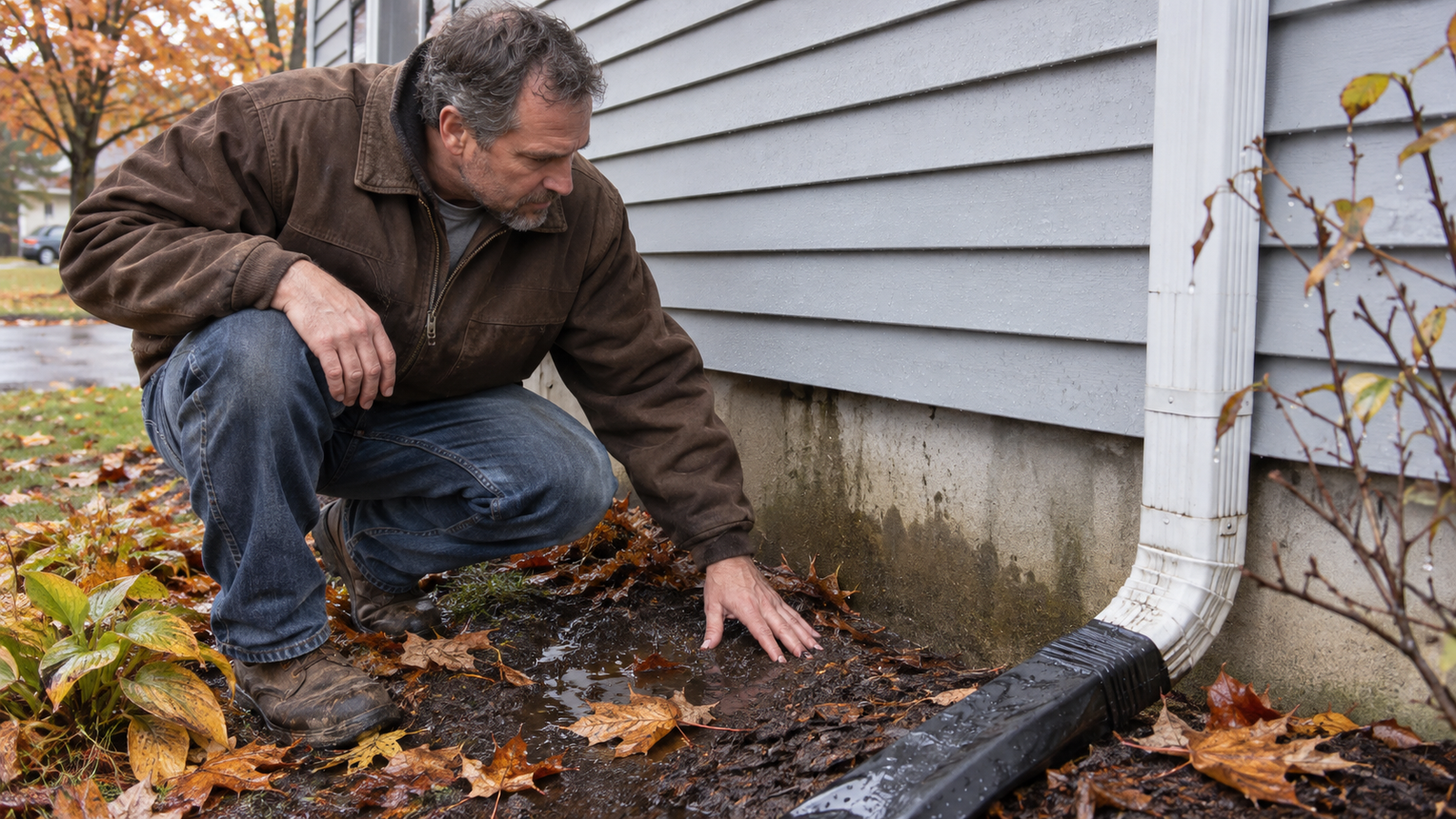
September 2026 was one for the record books in Iowa. Statewide, it was the fourth-wettest September on record, averaging 7.83 inches of rain, about 4.35 inches above normal, according to the Iowa DNR.
Des Moines got hit harder than that. The Des Moines airport recorded 14.50 inches of rain in September, according to Iowa State University’s Iowa Environmental Mesonet.
Heavy September rain may have left soil around some foundations wetter than usual as colder weather approaches. And in a few weeks, that ground starts to freeze.
Why a wet fall matters for your foundation
Much of Des Moines sits on clay that drains slowly. The Iowa Geological Survey describes drainage across the Des Moines Lobe as incomplete, and some common local soils are classified as poorly drained.
When that clay soaks up a month of heavy rain, a few things can happen:
- Water presses against basement walls. That’s when damp spots, seepage and first-time leaks tend to show up.
- Existing cracks can start letting water in. A dry hairline crack in July can be a wet one in October.
- Saturated soil freezes. Des Moines designs for a 42-inch frost line. Wet soil that freezes expands, and that can put extra pressure on walls, slabs and steps.
The good news: most of what you need to check takes a weekend afternoon and a flashlight.
Your before-the-freeze checklist
Outside
- Clean the gutters. Fall leaves plus heavy rain means overflowing gutters that dump water right at the foundation.
- Check every downspout. Make sure it has an extension carrying water well away from the house, not puddling against the wall.
- Look at the grading. The ground should slope away from the house. Low spots right against the wall collect water.
- Walk the foundation. Look for new cracks, gaps between the soil and the wall, or soil that’s washed away.
- Clear the window wells of leaves and debris.
Inside
- Check the basement walls, especially after a heavy rain. Look for damp patches, water stains, or white chalky deposits.
- Check where the floor meets the wall. Water showing up along that joint is worth paying attention to.
- Mark any cracks. Draw a pencil line at each end, write the date, and measure the width. Check again in a month. Don’t wait a month to get help if a crack is widening, the wall is bowing, or there’s significant water intrusion.
- Test your sump pump, if you have one. Pour a bucket of water into the pit and make sure it kicks on and pumps out.
- Check the discharge line. Make sure it drains away from the house and won’t freeze shut and back up this winter.
When to call someone
Most small, dry, stable cracks aren’t an emergency. But some signs are worth a professional look before winter sets in:
- A horizontal crack in a block wall, or a wall that looks like it’s bowing inward
- A crack that’s getting wider, or one where one side sits out from the other
- Stair-step cracks in block walls
- Water coming in along the floor-wall joint after rain
- Doors or windows that suddenly stick, or new gaps around frames
Our guides on foundation crack repair, basement waterproofing and French drains go into what each problem means and what the fixes typically cost.
The bottom line
A record-wet September doesn’t mean your foundation has a problem. But it’s the kind of fall that shows you where water is getting in, while there’s still time to fix the easy things like gutters, downspouts and grading before the ground freezes.
Take an afternoon this month and walk around your house. If you find something that worries you, it’s much easier to deal with now than in the middle of an Iowa winter.
Seeing new cracks or water after all that rain?
Tell us what’s going on and we’ll connect you with an independent local contractor who can explain the next steps toward an estimate.